

You can feel it before anyone says it out loud—something isn’t right.
Your child is overwhelmed, shutting down, or spiraling… and you’re left trying to hold it together while quietly panicking.
If you’re here, you’re not alone. And more importantly—you’re not too late.
Early, compassionate support can change the trajectory. You can start by exploring anxiety treatment services designed for moments exactly like this.
What an Anxiety Crisis Can Look Like (Even If It Doesn’t Look “Severe”)
Not every crisis looks dramatic.
Sometimes it’s your child staying in their room for days.
Sometimes it’s panic attacks that come out of nowhere.
Sometimes it’s a constant hum of fear they can’t explain.
You might notice:
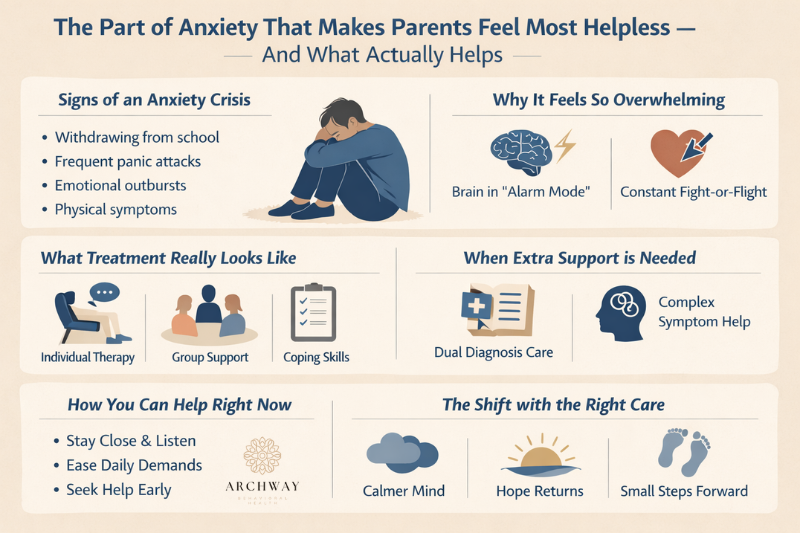
- Sudden withdrawal from school or responsibilities
- Trouble sleeping—or sleeping all day
- Irritability, fear, or emotional outbursts
- Physical symptoms like headaches or stomach pain
- A sense that they’re overwhelmed by everything
It doesn’t have to “get worse” to be taken seriously. If it feels like too much, it already is.
Why Anxiety Feels So Different During a Crisis
Anxiety isn’t just worry. In a crisis, it can take over the nervous system completely.
Think of it like a smoke alarm that won’t turn off—even when there’s no fire.
Your child isn’t choosing this. Their body is reacting as if they’re in danger, even when they’re safe.
That’s why logic alone doesn’t help.
And it’s why treatment focuses on calming both the mind and the body.
What Treatment Actually Looks Like (And What It Doesn’t)
Many parents worry about sending their child into something cold or clinical.
In reality, good anxiety care feels structured—but human.
Treatment may include:
- One-on-one therapy to understand what’s driving the anxiety
- Gentle skill-building to manage panic and overwhelm
- Group support so they don’t feel alone in this
- Psychiatric guidance if symptoms are intense or persistent
Depending on what your child needs, this could mean structured daytime care or multi-day weekly treatment—not necessarily removing them from their life completely.
And if anxiety is tangled with other challenges, like mood instability or more complex symptoms, care can expand into things like treatment in Dual Diagnosis or even treatment in Psychotic Disorder, always with the goal of understanding the full picture.
The Role of an Anxiety Specialist (And Why It Matters)
Not all therapy is the same—especially during a crisis.
An experienced anxiety therapist Boca Raton families trust will know how to:
- Stabilize intense emotional reactions
- Help your child feel safe again—not just “talk it out”
- Identify patterns quickly and adjust care in real time
This isn’t about long-term insight alone.
It’s about helping your child feel better enough to function again.
What You Can Do as a Parent Right Now
You don’t need to have perfect answers. You just need a place to start.
Here are a few ways to support them today:
- Stay close, not forceful. Presence matters more than pressure.
- Lower expectations temporarily. Survival comes before performance.
- Listen more than you fix. Even if what they say doesn’t fully make sense.
- Get support early. You don’t have to wait for things to “break.”
One of the hardest truths?
You can’t carry this for them—but you don’t have to carry it alone.
The Quiet Shift That Happens With the Right Help
Something changes when the right support is in place.
The panic softens.
The constant tension loosens.
Your child starts to come back—not all at once, but in small, steady ways.
And you start to breathe again, too.
That’s what treatment is really for. Not just symptom management—but giving your family a way forward that feels possible again.
You Don’t Have to Figure This Out Alone
If you’re feeling overwhelmed, that makes sense. This is a lot to carry.
But there is a next step—and it doesn’t have to be complicated.
Call (888) 488-4103 or visit our anxiety treatment services in Boca Raton to learn more about how we can support your child and your family through this.
We’ll meet you where you are and help you take the next step forward, together.
