

Loving someone who’s hurting is its own kind of ache. When anxiety is part of the picture and substance use has entered the frame, it’s easy to feel caught in a spiral of worry, hope, and helplessness. You see how much they’re struggling. You want to help. But you might not know where support ends and enabling begins.
If you’re navigating life with a partner who’s using substances while also battling anxiety, this isn’t your burden to fix alone. Help exists, not just for them, but for you too.
Archway’s anxiety treatment services are designed to address both the symptoms you see and the pain they don’t always show.
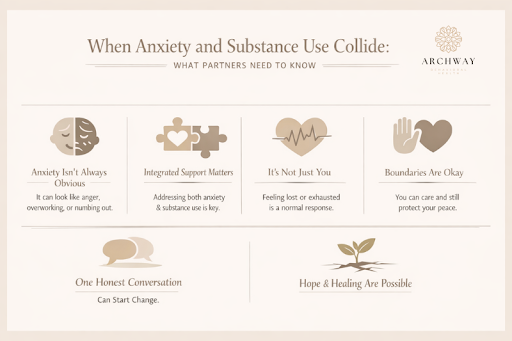
Anxiety Doesn’t Always Look Like Worry
Sometimes it looks like overworking, zoning out, snapping over small things, or needing to control every detail. When substances enter the mix, they’re often not about “getting high” they’re about getting relief.
Many people self-medicate without realizing it. A drink to take the edge off. A pill to fall asleep. A pattern that starts as coping can quietly become dependence.
And while it’s tempting to focus on the substance use alone, untreated anxiety is often the root.
Why Treatment That Sees Both Matters
When anxiety and substance use collide, care needs to be more than one-size-fits-all.
Programs that only treat addiction might miss the fear and restlessness underneath. Mental health programs that don’t address substance use might not fully prepare your loved one to break the cycle.
What helps most is care that understands both: how panic leads to avoidance, how shame fuels using, how exhaustion gets mistaken for apathy.
Integrated support offers space to untangle what’s going on without judgment.
You’re Not Imagining the Whiplash
Good day. Bad day. Calm morning. Chaotic night.
Being with someone who’s struggling with both anxiety and substance use can feel like emotional whiplash. You might question your instincts. Doubt your boundaries. Wonder if you’re helping or hurting.
That confusion is real. And it makes sense.
You’re caring deeply in a situation designed to exhaust you. That doesn’t make you codependent, it makes you human.
Hope Isn’t the Same as Fixing
It’s okay to want them to change. To believe in their potential. To hope for the person you’ve seen beneath the pain.
But you’re allowed to have your own limits, too.
Support doesn’t always mean doing more. Sometimes it means stepping back. Letting a professional hold what you’ve been carrying. Structured daytime care can offer your loved one a path forward and give you room to breathe.
Healing Often Begins with One Honest Conversation
Even if your partner isn’t ready for help today, you can still gather information, ask questions, and prepare for what’s next. It doesn’t mean you’re giving up, it means you’re choosing to stay steady even when they can’t.
If and when they are ready, there are treatment options in Dual Diagnosis that specialize in the overlap between mental health and substance use. You don’t have to guess your way through this.
You Deserve Support Too
You can love someone and still need boundaries. You can hope for change and still protect your peace.
Getting clear on what’s yours to hold and what’s not, is a powerful first step.
📞 Ready to talk with someone who understands both sides of this?
Call 888-488-4103 or explore our anxiety treatment program services to learn more about how we support people navigating anxiety and substance use together.
