
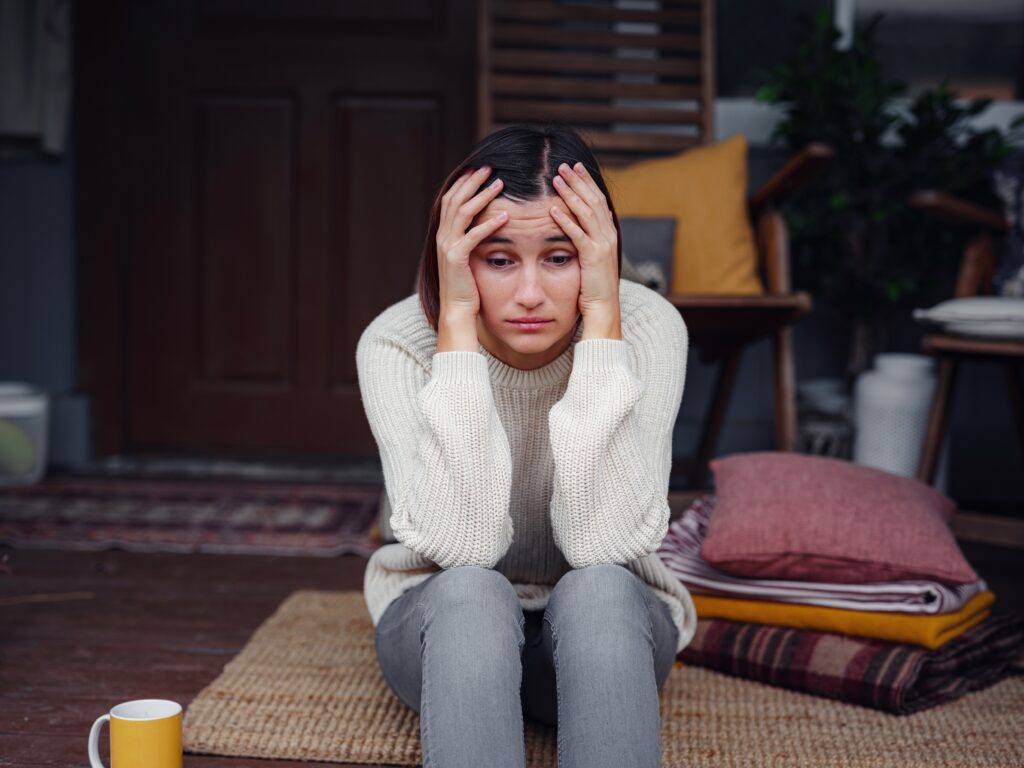
A few years ago, I sat across from a therapist and asked a question I was almost embarrassed to say out loud.
“What if getting help changes who I am?”
I wasn’t just talking about symptoms. I was talking about my personality. My creativity. The parts of me that felt intense, emotional, imaginative, and alive.
If you’ve been exploring personality-focused mental health support, you may recognize that fear. For some people living with borderline personality disorder, the concern isn’t just whether treatment works. It’s whether healing will erase the parts of themselves they value most.
No one told me that the opposite might be true.
The Fear Was Never Really About Treatment
The fear wasn’t about appointments, therapy, or learning new skills.
It was about identity.
For a long time, my emotions felt tied to my creativity. The highs brought energy. The intensity fueled art, writing, relationships, and ideas. Even the chaos felt connected to who I was.
The thought of becoming “stable” sounded suspiciously close to becoming flat.
That’s a hard fear to admit because it can make you feel like you don’t want help. In reality, many people want relief and are terrified of losing themselves at the same time.
Both things can be true.
Creativity Isn’t the Same Thing as Crisis
One of the biggest surprises was realizing that creativity and emotional suffering aren’t the same thing.
They can exist together, but they are not identical.
For years, I confused intensity with inspiration. I thought the emotional storms were responsible for every meaningful thing I created.
Then something unexpected happened.
As I learned healthier ways to manage relationships, emotions, and self-image, my creativity didn’t disappear. It became easier to access.
I spent less time recovering from emotional crashes and more time creating.
The energy wasn’t always dramatic. It was steadier. More reliable.
Like having access to a river instead of waiting for a flood.
Treatment Didn’t Take Away My Personality
I expected treatment to make me feel less like myself.
Instead, it helped me separate who I was from what I was struggling with.
Impulsivity wasn’t my personality.
Fear of abandonment wasn’t my personality.
Constant emotional whiplash wasn’t my personality.
Underneath those experiences was someone who still loved deeply, thought creatively, cared intensely, and felt things strongly.
The difference was that those traits no longer controlled every aspect of my life.
Many people exploring BPD treatment options discover that treatment isn’t about replacing their identity. It’s about reducing the pain that keeps their authentic identity buried.
The Parts of Me I Thought I’d Lose Became Stronger
This was the part nobody explained.
I became a better friend.
A better artist.
A better listener.
A better partner.
Not because I became less emotional, but because I wasn’t constantly fighting emotional emergencies.
Creativity often needs space.
Relationships need consistency.
Self-expression needs enough stability to actually show up.
The things I valued most about myself had room to grow once everything wasn’t operating in survival mode.
Healing Made Relationships Feel More Real
Before treatment, many relationships felt like standing on shifting sand.
Every disagreement felt enormous.
Every perceived rejection felt personal.
Every connection felt fragile.
Learning new skills didn’t remove my capacity for connection. It strengthened it.
I could stay present during difficult conversations. I could tolerate uncertainty. I could recognize that someone’s bad day wasn’t automatically evidence they were leaving me.
That changed everything.
For people whose mental health challenges overlap with substance use concerns, finding the right kind of help in Dual Diagnosis can be an important step toward creating that same sense of stability.
What Actually Gave Me Hope
Hope didn’t arrive as a dramatic breakthrough.
It showed up in small moments.
Finishing a project I would have abandoned before.
Having an argument without feeling like the relationship was over.
Waking up and feeling curious about the day instead of afraid of it.
Those moments added up.
If you’re researching BPD treatment options because you’re worried you’ll lose your spark, your creativity, or your identity, I understand that fear.
I had it too.
What I found wasn’t a smaller version of myself.
I found a version of myself that had more room to breathe.
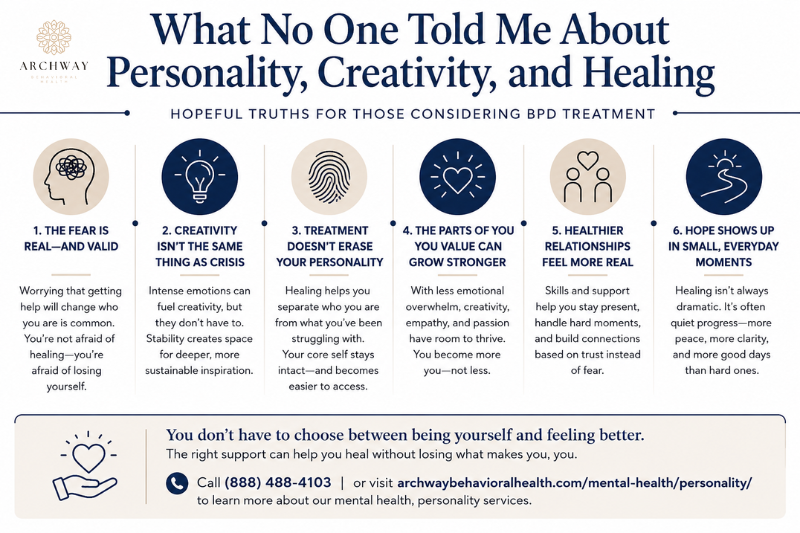
You Don’t Have to Choose Between Being Yourself and Feeling Better
One of the most painful misconceptions is the belief that healing requires becoming someone else.
In many cases, treatment helps people reconnect with parts of themselves that have been overshadowed by emotional distress for years.
The goal isn’t to erase your personality.
The goal is to help you live with it more comfortably.
To create, connect, and express yourself without constantly carrying the weight of emotional overwhelm.
If you’ve been wondering whether support could help, learning more about available approaches can be a meaningful first step.
Call (888) 488-4103 or visit our mental health, personality services to learn more about our mental health, personality services in .
