

Some relapses don’t arrive with chaos.
Sometimes they show up quietly — like a dimmer switch slowly turning down the light.
I didn’t notice it at first. I just knew something felt… heavier.
I had already been through treatment once, so I thought I’d recognize the warning signs immediately. But the truth is, the moment you realize you might need help again often looks a lot quieter than people expect.
If you’re in that moment right now, you’re not the only one.
And it doesn’t mean you failed.
The First Sign Wasn’t Dramatic — Just Different
For me, the shift started small.
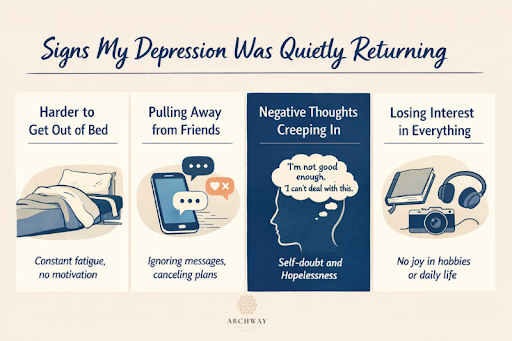
Getting out of bed felt harder.
The things that used to help — routines, calls with friends, journaling — started slipping away.
Nothing looked catastrophic from the outside.
But inside, I could feel something familiar creeping back.
That slow emotional fog.
The kind where everything feels heavier but you keep telling yourself it’s temporary.
The Lie My Brain Started Whispering
Depression has a quiet voice.
It doesn’t always scream. Sometimes it just suggests things.
“You’re just tired.”
“You’re overreacting.”
“You should be able to handle this by now.”
After having some recovery time, those thoughts hit differently.
They carry a little extra shame.
Like you’re supposed to have this figured out already.
But mental health doesn’t work like that. Healing isn’t a straight road.
Sometimes the same hill shows up again.
The Moment It Finally Clicked
The realization didn’t come during a crisis.
It came during an ordinary afternoon.
I was sitting on the couch, scrolling my phone, ignoring three texts from people I care about. The room felt heavy, and the silence felt familiar in a way I didn’t like.
That’s when the thought landed:
I think I might need support again.
Not because everything was falling apart.
But because I recognized the direction things were moving.
Getting Help Again Isn’t Starting Over
One of the hardest parts of returning to treatment is the fear that it means you’re back at square one.
But that’s not how recovery works.
Coming back means you noticed something early.
It means you remembered what helped before.
And it means you’re choosing yourself again.
Many alumni return to care at different points in their lives. Sometimes that looks like therapy, sometimes structured support during the week, and sometimes reconnecting with a depression treatment program that understands the ups and downs of long-term mental health recovery.
The point isn’t perfection.
It’s staying in the conversation with your own well-being.
Some People Need More Support Than They Expect
Depression also doesn’t always travel alone.
For some people, mental health challenges overlap with anxiety, trauma, or substance use. When those experiences collide, it can make the emotional landscape even harder to navigate alone.
That’s why some alumni explore options like support in Dual Diagnosis — care designed for people facing multiple layers of mental health challenges at once.
There’s no shame in needing deeper support.
Only wisdom in recognizing it.
The Quiet Courage of Trying Again
Here’s something I wish someone had told me sooner:
Needing help again doesn’t erase the progress you made.
Those months of stability still matter.
Everything you learned still belongs to you.
Recovery isn’t measured by never struggling again.
It’s measured by how gently you return to yourself when you do.
And sometimes, the bravest thing a person can do is admit:
I think I need support again.
If this story feels familiar, you don’t have to navigate it alone.
Call (888) 488-4103 or explore your options through our depression treatment program services to learn more about support available through Archway Behavioral Health.
Reaching out again might feel hard — but it can also be the moment things begin to feel lighter.
