

There’s a conversation that doesn’t happen often enough in recovery.
Someone gets sober. They do the work. They stay sober for a year, two years, maybe longer. From the outside, everything looks better.
But inside, something feels off.
The chaos is gone, yet the sense of purpose hasn’t fully returned. The crisis has ended, but life still feels muted. If that sounds familiar, you’re not failing recovery. You’re running into something many people experience when mental health challenges continue underneath the surface of substance use.
For many alumni, lasting healing begins when they realize sobriety was only part of the story. If you’re exploring deeper support, learning more about addiction recovery services can be an important next step.
Sobriety Removes the Smoke. It Doesn’t Always Reveal the Fire
As clinicians, we see this pattern often.
Someone stops drinking or using drugs and expects relief to follow. Sometimes it does. Other times, symptoms that were hidden by substances become more visible.
Depression feels heavier.
Anxiety becomes harder to ignore.
Motivation disappears.
Relationships still feel disconnected.
The substances weren’t causing every problem. In many cases, they were covering up struggles that had been there all along.
This is one reason recovery can feel confusing after the first year. People expect freedom and instead find themselves face-to-face with emotions they’ve been avoiding for years.
The Goal Was Never Just Survival
Early recovery is often about staying afloat.
You attend meetings. Build routines. Avoid triggers. Make it through one day at a time.
Those skills matter. They save lives.
But eventually, many people reach a point where surviving isn’t enough anymore.
They start asking harder questions:
- Why do I still feel numb?
- Why can’t I connect with people the way I want to?
- Why does life feel flat even though I’m doing everything right?
- Why am I exhausted all the time?
Those questions aren’t signs of weakness.
They’re signs that you’re ready for a different level of healing.
When Mental Health and Substance Use Have Been Working Together
Imagine trying to fix a leaky roof while ignoring a cracked foundation.
You might stop the water temporarily, but the structure underneath remains unstable.
The same thing can happen in recovery.
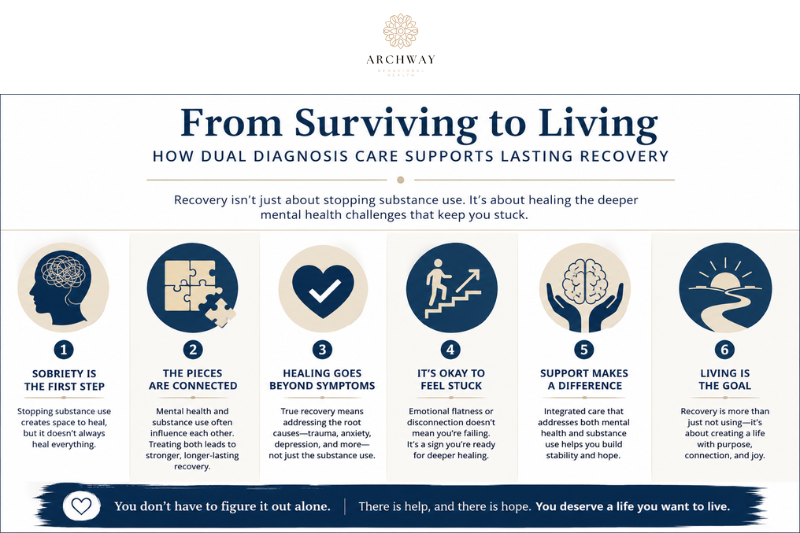
Mental health conditions and substance use disorders frequently feed each other. Depression may lead someone to self-medicate. Alcohol or drug use may then worsen depressive symptoms. Anxiety can fuel substance use, while substance use creates even more anxiety.
The cycle becomes so intertwined that it’s difficult to tell where one problem ends and the other begins.
That’s why many people benefit from approaches that address both issues at the same time rather than treating them separately. For individuals seeking comprehensive dual diagnosis treatment Boca Raton providers often recommend integrated care because it recognizes the full picture instead of focusing on only one symptom.
Feeling Stuck Doesn’t Mean You’re Broken
One of the biggest misconceptions among long-term alumni is that they should be grateful all the time.
You got sober.
Your life improved.
What do you have to complain about?
That thinking keeps many people silent.
The truth is that recovery isn’t measured by how often you smile. It’s measured by your willingness to stay honest.
If you’re feeling disconnected, emotionally flat, or lost, that experience deserves attention. Ignoring it doesn’t make it disappear.
In fact, some of the most important recovery work begins after the obvious crises have passed.
“I thought getting sober would solve everything. It solved a lot. But then I had to learn how to actually live.”
That’s a sentence we hear often from alumni who continue growing long after their initial treatment experience.
Lasting Recovery Often Requires a Second Layer of Healing
Some people spend years trying to push through emotional struggles on willpower alone.
Eventually, many realize they need additional support.
That support may involve therapy focused on unresolved trauma. It may involve psychiatric care. It may involve reconnecting with treatment resources designed for people who are sober but still struggling emotionally.
For individuals dealing with serious mental health symptoms alongside recovery, seeking specialized support in Dual Diagnosis can help uncover what’s keeping them stuck.
Others may need more focused care in Psychotic Disorder treatment when symptoms extend beyond depression or anxiety.
The point isn’t that something is wrong with you.
The point is that healing often happens in layers.
Living Is Different Than Simply Not Using
Many people enter recovery believing the finish line is abstinence.
It isn’t.
Abstinence creates the opportunity for a meaningful life. It doesn’t automatically create one.
Living means finding purpose again.
It means rebuilding connection.
It means learning how to experience joy without chemicals creating it for you.
It means addressing the mental health struggles that may have been there long before the first drink or drug.
And sometimes it means asking for help long after everyone assumes you’re doing fine.
That isn’t moving backward.
It’s what moving forward often looks like.
Recovery becomes more sustainable when it stops being about avoiding substances and starts becoming about building a life you genuinely want to stay present for.
If you’re sober but still feel disconnected, emotionally exhausted, or stuck, you don’t have to figure it out alone. Call (888) 488-4103 or visit our addiction recovery services to learn more about our addiction, drug services in .
