

If you’ve been swinging between periods of intense energy and crushing emotional lows, you may feel like you’re living two different lives. One version of you feels unstoppable. The other struggles just to get through the day.
That cycle can be exhausting, confusing, and frightening. The good news is that you don’t have to figure it out alone. Many people who experience recurring episodes of mania and depression find stability through professional support, and treatment often begins with understanding what’s happening beneath the surface.
If you’re looking for answers, exploring bipolar mental health services can be an important first step.
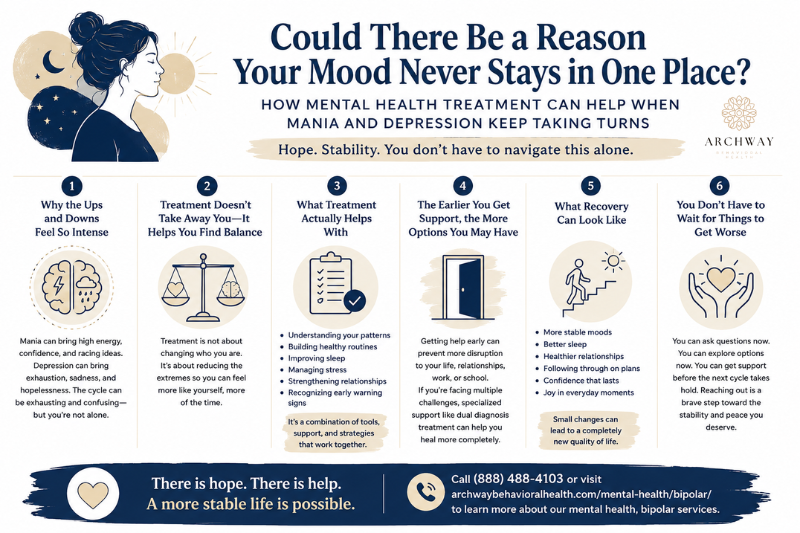
Why the Shift Between Highs and Lows Can Feel So Disorienting
Mania and depression often seem like complete opposites, but they are connected parts of the same condition.
During a manic episode, you might feel energized, creative, confident, or driven. Sleep may seem unnecessary. Ideas come quickly. Decisions feel easy.
Then the pendulum swings.
Depression can bring exhaustion, hopelessness, difficulty concentrating, and a sense that even simple tasks require enormous effort.
The hardest part is that both experiences feel real while they’re happening. Looking back later can feel like watching someone else’s life unfold.
Treatment Isn’t About Taking Away Your Personality
One fear many people carry is that treatment will erase the parts of themselves they value.
If you’ve experienced periods of heightened creativity, productivity, or confidence, it’s understandable to worry that getting help means becoming someone different.
Treatment is not designed to flatten your identity. The goal is to reduce the severity of mood episodes so you have more control over your choices, relationships, and daily life.
A useful way to think about it is this:
Mood episodes can act like a radio stuck between stations. Treatment helps reduce the static so you can hear your own voice more clearly.
What Mental Health Treatment Actually Helps With
Many first-time treatment seekers imagine that help only means medication. In reality, treatment often includes several forms of support working together.
Depending on your needs, treatment may focus on:
- Understanding patterns that trigger mood episodes
- Building routines that support emotional stability
- Improving sleep habits
- Strengthening communication with loved ones
- Managing stress before it becomes overwhelming
- Learning how to recognize early warning signs
Therapy can also provide a place to process the emotional aftermath of mood episodes. Many people carry guilt, embarrassment, or confusion about things that happened during periods of mania or depression.
Working through those experiences can be just as important as addressing symptoms themselves.
The Earlier You Get Support, the More Options You May Have
Many people wait years before seeking help because they assume things will eventually balance out on their own.
Sometimes they do for a while.
Then another cycle arrives.
Seeking support earlier can help prevent mood episodes from causing further disruption to relationships, work, education, or overall well-being.
For some individuals, mental health conditions become more complex when other challenges are involved. If you’re dealing with multiple concerns at the same time, finding specialized help in Dual Diagnosis may provide a more complete path forward.
What Recovery Often Looks Like in Real Life
Recovery isn’t usually a dramatic overnight transformation.
More often, it looks like:
- Sleeping through the night more consistently
- Feeling less controlled by emotional extremes
- Having steadier relationships
- Being able to make plans and follow through
- Experiencing confidence that isn’t tied to a manic episode
- Finding joy without waiting for a mood swing to create it
Those changes may sound small, but they can completely change how life feels.
For many people searching for manic depression treatment Boca Raton options, what they’re really searching for is relief. They want to know whether life can stop feeling so unpredictable.
The answer is yes. Stability is possible.
You Don’t Have to Wait for Things to Get Worse
A common misconception is that you have to reach a breaking point before seeking treatment.
You don’t.
You can ask questions now. You can explore options now. You can get support before another cycle takes hold.
And if symptoms ever include confusion, severe mood disturbances, or experiences that feel disconnected from reality, specialized support in Psychotic Disorder treatment may also be worth discussing with a mental health professional.
The important thing is knowing that help exists and that seeking it is not a sign of weakness. It’s a decision to give yourself a chance at greater stability, clarity, and peace.
Ready to Learn More?
If mania and depression keep taking turns in your life, you don’t have to navigate the uncertainty alone. Professional support can help you better understand your symptoms, develop practical coping strategies, and build a more stable future.
Call (888) 488-4103 or visit our bipolar services page to learn more about our mental health, bipolar services.
