

I used to think the fact that my life looked normal meant my drinking was fine.
Bills paid. Job stable. Friends still calling. From the outside, nothing screamed “problem.”
But eventually the quiet truth caught up with me—and the first step toward change started with finding flexible recovery support that fit around my life.
The Myth of “Functional Enough”
High-functioning drinking is sneaky.
You wake up early.
You answer emails.
You show up to meetings.
And then, somewhere between the stress of the day and the silence of the evening, the drinking starts again.
Not dramatic. Not reckless.
Just… constant.
I told myself the same line over and over:
“If it were really a problem, my life would be falling apart.”
But the truth is, sometimes the hardest addictions to admit are the ones hiding behind a successful-looking life.
The Exhaustion Nobody Sees
What people don’t talk about is the mental math.
Counting drinks.
Planning the next one.
Making sure nobody notices how quickly the glass refills.
It’s like running two lives at once.
One where you’re the responsible adult everyone trusts.
And another where alcohol quietly runs the schedule.
The exhaustion from that double life is real. And eventually, it leaks into everything—sleep, patience, focus, relationships.
The Moment the Story Broke
My turning point wasn’t dramatic.
No DUI.
No job loss.
No family intervention.
It was a Tuesday night.
I was standing in my kitchen, pouring another drink I didn’t even want, and I realized something simple:
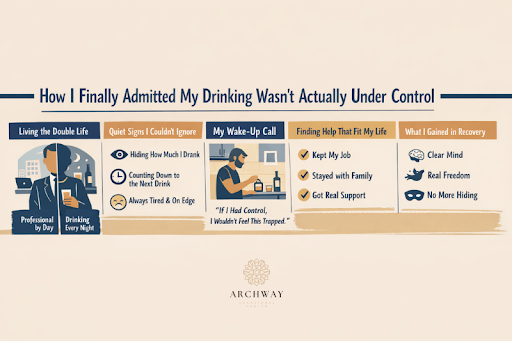
If I had control, I wouldn’t feel this trapped.
That thought stuck.
For the first time, I stopped arguing with myself and started wondering what real support might look like.
Finding Help Without Blowing Up My Life
One of the biggest reasons people like me delay getting help is fear.
Not fear of stopping.
Fear of everything changing.
I assumed treatment meant disappearing from work, explaining everything to everyone, and hitting pause on life.
But there are options built for people who still need to keep moving—programs that offer structure several days a week while letting you keep your job, family responsibilities, and routines.
For someone used to carrying everything alone, that kind of support can feel like breathing again.
The Strange Relief of Saying It Out Loud
Walking into treatment didn’t feel like failure.
It felt like relief.
For the first time, I sat in a room with people who also had jobs, families, responsibilities—and still felt completely out of control with alcohol.
No one was shocked by my story.
In fact, it sounded familiar.
That moment shattered the lie that I was the only one quietly struggling behind a functional life.
Recovery Isn’t About Losing Your Life
One of my biggest fears was losing who I was.
The social version of me.
The relaxed version of me.
The version that could “handle anything.”
What I actually lost was the constant tension.
The pretending.
The calculating.
The quiet shame that came with every promise to “drink less tomorrow.”
What came back instead was energy I didn’t realize alcohol had been draining for years.
The Truth Most High-Functioning People Don’t Hear
You don’t have to lose everything to deserve help.
You don’t have to hit rock bottom.
And you definitely don’t have to wait until the people around you start noticing.
Sometimes the real wake-up call is much quieter.
Realizing the life you’re maintaining is costing more than anyone can see.
For many people navigating both mental health and substance struggles, finding the right kind of support can also mean getting the right kind of care—like specialized help in Boca Raton for people facing overlapping challenges.
The important thing is knowing you don’t have to carry it alone anymore.
