

You’re still showing up. Still answering emails. Still making it to dinner, meetings, workouts.
And somehow… it’s still not okay.
If you’ve found yourself back in your routine but quietly unraveling during the hours no one sees, you’re not alone—and you’re not broken. There’s a reason so many people eventually reach for something more structured, like an intensive outpatient program, even when everything looks fine.
You Didn’t Fall Apart—You Just Got Tired
High-functioning doesn’t mean healthy. It means you’ve learned how to push through.
You know how to compartmentalize. You’ve built a life where things don’t collapse easily. That’s part of what makes this so confusing—because nothing dramatic is happening.
But internally? You’re exhausted.
It’s the kind of tired sleep doesn’t fix. The kind that shows up as irritability, numbness, or that quiet thought: “I can’t keep doing this the same way.”
The Daytime Is the Hardest Part No One Talks About
There’s a strange gap that opens up when you’re no longer in crisis—but not fully grounded either.
Mornings feel aimless. Afternoons drag. You fill time, but it doesn’t feel meaningful. The structure you had before—whether it was chaos or control—is gone.
This is where a lot of people start to slip. Not because they don’t care, but because no one prepared them for the in-between.
This is also where life after rehab can feel the most disorienting—because the world expects you to be “better,” but you’re still figuring out what that even means.
You’re Functioning… But at What Cost?
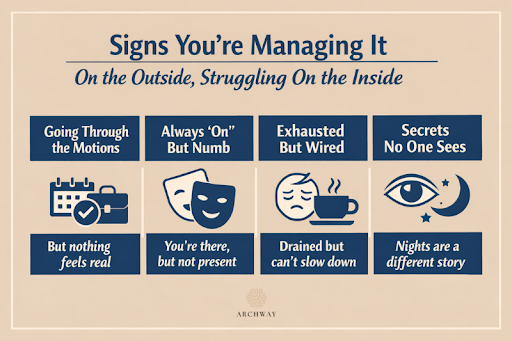
Let’s be honest about what “functioning” really looks like:
- You’re getting things done—but everything feels heavier
- You’re present—but not fully there
- You’re coping—but barely
From the outside, nothing is wrong. Inside, everything feels fragile.
That disconnect is exhausting to carry alone.
You Don’t Need to Hit Bottom to Need Support
There’s a myth that things have to fall apart before you’re “allowed” to get help.
That’s not true.
A lot of people who reach out for structured, multi-day weekly treatment aren’t in crisis. They’re in that quiet, in-between place where things are technically fine—but emotionally unsustainable.
They’re not trying to start over. They’re trying to stabilize what they’ve already built.
Structure Isn’t a Step Back—It’s a Reset
There’s something powerful about having a place to go during the day that isn’t work, and isn’t isolation.
A space where:
- You don’t have to pretend you’re okay
- You don’t have to explain why you’re struggling
- You can rebuild rhythm without pressure
That’s what structured daytime care offers. Not intensity for the sake of it—but consistency, accountability, and space to actually process what’s going on.
For some people, this also means getting the right kind of support when mental health and substance use collide—like finding the right kind of support in Dual Diagnosis.
The Moment People Finally Reach Out
It’s rarely dramatic.
It’s a quiet realization:
“I’m managing everything… but I don’t feel like myself anymore.”
That’s usually the moment.
Not a breakdown. Not a crisis. Just a clear, honest awareness that something needs to change.
And that’s enough.
You don’t have to wait until things fall apart to get support that actually fits your life.
Call (888) 488-4103 or visit our intensive outpatient program services to learn more about our intensive outpatient program services in Boca Raton.
