

Your brain doesn’t clock out just because you’re trying to quit.
The racing thoughts. The old memories that still grab you by the throat. The part of you that wants help, and the part that still isn’t sure.
This guide was written for that moment—when you know something has to change, but everything feels tangled.
That’s where EMDR therapy can help.
EMDR therapy isn’t just for trauma survivors—it’s also a powerful tool for people navigating both mental health challenges and substance use. Here’s how it works—and why it might be worth exploring.
1. Understand Why Traditional Talk Therapy May Not Be Enough
When you’re dealing with a dual diagnosis—like depression and alcohol use, or PTSD and opioid dependence—talking through it isn’t always the fix.
It can help, yes. But sometimes the words don’t come. Or you know what happened, but you still can’t stop feeling the way you do.
That’s where EMDR steps in. It works directly with your brain’s memory and stress systems—no long explanations needed.
2. Know What EMDR Therapy Actually Does (and Doesn’t Do)
EMDR stands for Eye Movement Desensitization and Reprocessing. It uses guided eye movements (or tapping or sounds) to help your brain “digest” traumatic or overwhelming memories—so they stop hijacking your present.
It does not erase your memories.
It does reduce the emotional charge those memories carry—making them less likely to trigger anxiety, cravings, or panic attacks.
For many in dual diagnosis treatment, this emotional relief is what creates enough space to start healing.
3. Use EMDR to Unhook the Trauma-Substance Loop
Many people use substances to cope with pain they can’t name. Childhood abuse, violence, neglect, abandonment—these aren’t just stories. They shape how you think, feel, and survive.
EMDR therapy helps interrupt that survival loop. It creates new mental “pathways” so your brain doesn’t default to the same reactions—whether that’s panic, shutdown, or reaching for something to numb it all.
4. You Don’t Have to Be “Stable” First to Start EMDR
This is a big one. A lot of people think they have to be totally sober or mentally “ready” before they can try trauma therapy. That’s not always true.
At Archway Behavioral Health in Boca Raton, EMDR therapy can be safely integrated into treatment even while you’re working through substance use.
You’ll go at your own pace. And you’ll have support the entire way.
5. EMDR Isn’t Just for the Big “T” Trauma
Yes, EMDR helps with severe trauma. But it’s also effective for:
- Emotional neglect
- Chronic anxiety
- Bullying or relationship abuse
- Shame linked to relapse or substance use
- Medical trauma or misdiagnosis
In dual diagnosis care, EMDR becomes a flexible tool—one that meets you where your pain lives, not just the obvious stuff.
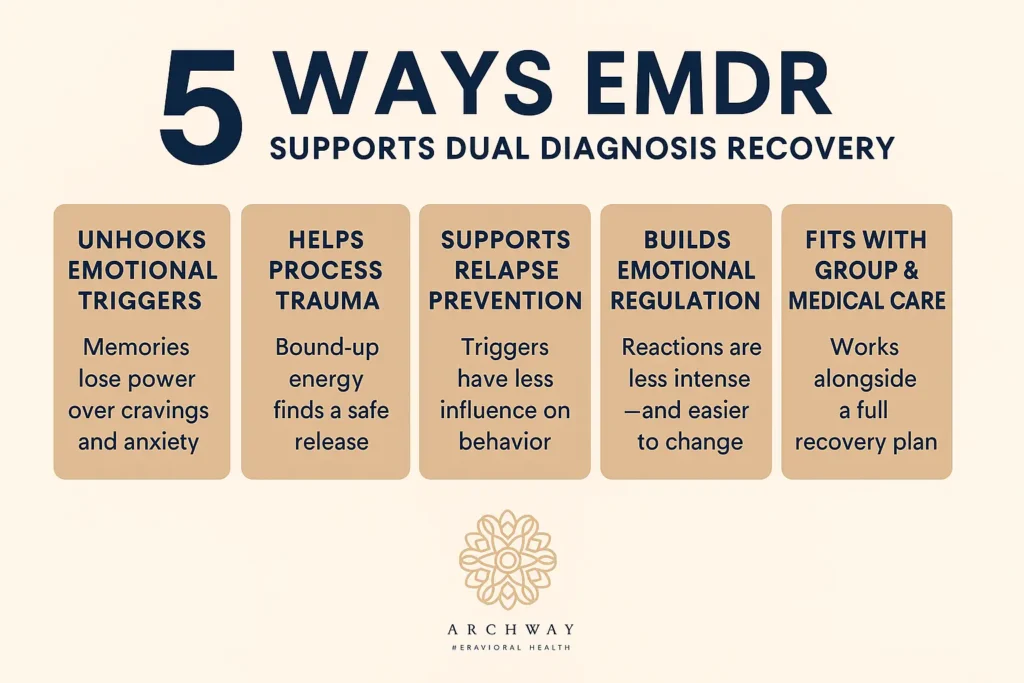
6. Combine EMDR with Real-Life Recovery Support
EMDR is powerful—but it’s not magic. It works best when paired with solid, real-world support like:
- Group therapy and peer connection
- Medication management (if needed)
- Skills-based therapies like CBT or DBT
- Compassionate, nonjudgmental providers
If you’re looking for EMDR therapy in Highland Beach, you’ll find programs nearby that include trauma-informed care alongside addiction and mental health support. Explore treatment options in Highland Beach.
7. Let EMDR Help You Reclaim Who You Are
It’s not just about feeling “better.”
It’s about feeling more like yourself. Less foggy. Less reactive. More able to connect, trust, and move forward without being pulled back into the same old storm.
If you’ve felt stuck between anxiety and addiction…
If you’ve tried to quit but the past keeps pulling you back…
EMDR therapy could be the bridge between surviving and actually living.
📞 Ready to take the first step?
Call (888) 530-0227 or visit to learn more about our EMDR therapy services in Boca Raton, Florida.
