

You don’t have to wait for a rock bottom moment to start thinking about what could help you stay grounded. In fact, if you’re already wondering how to avoid a relapse—even if you haven’t quit yet—you’re asking one of the smartest, most self-aware questions possible.
Relapse prevention isn’t about being perfect. It’s about building a plan that gives you something to lean on before things get overwhelming. And when you’re sober curious—exploring life with less or no substance use—a solid, real-life strategy can be the difference between white-knuckling it and actually feeling empowered.
That’s where DBT therapy comes in.
At Archway Behavioral Health, we use Dialectical Behavior Therapy to help people build relapse prevention plans that actually work—not just in theory, but in the messy, real-life moments when things get hard. This guide walks you through how it works, what it looks like, and how you can start building your own.
Start by Defining What Relapse Means to You
“Relapse” isn’t a one-size-fits-all term. For someone in recovery from heroin use, it might mean a dangerous return to substances. For a sober curious person, it might mean deciding to drink at a party after a month off. Or it could mean slipping back into emotional habits that always lead to using—even if the substance hasn’t re-entered the picture yet.
That’s why the first step in building a plan is getting honest about your own definitions:
- What does “relapse” look like for you?
- What behaviors would feel like losing progress?
- What thoughts or emotional patterns usually show up before that point?
In DBT, we don’t define relapse for you. We help you name it for yourself—and then build strategies around those definitions.
Identify the Specific Triggers and Patterns That Matter in Your Life
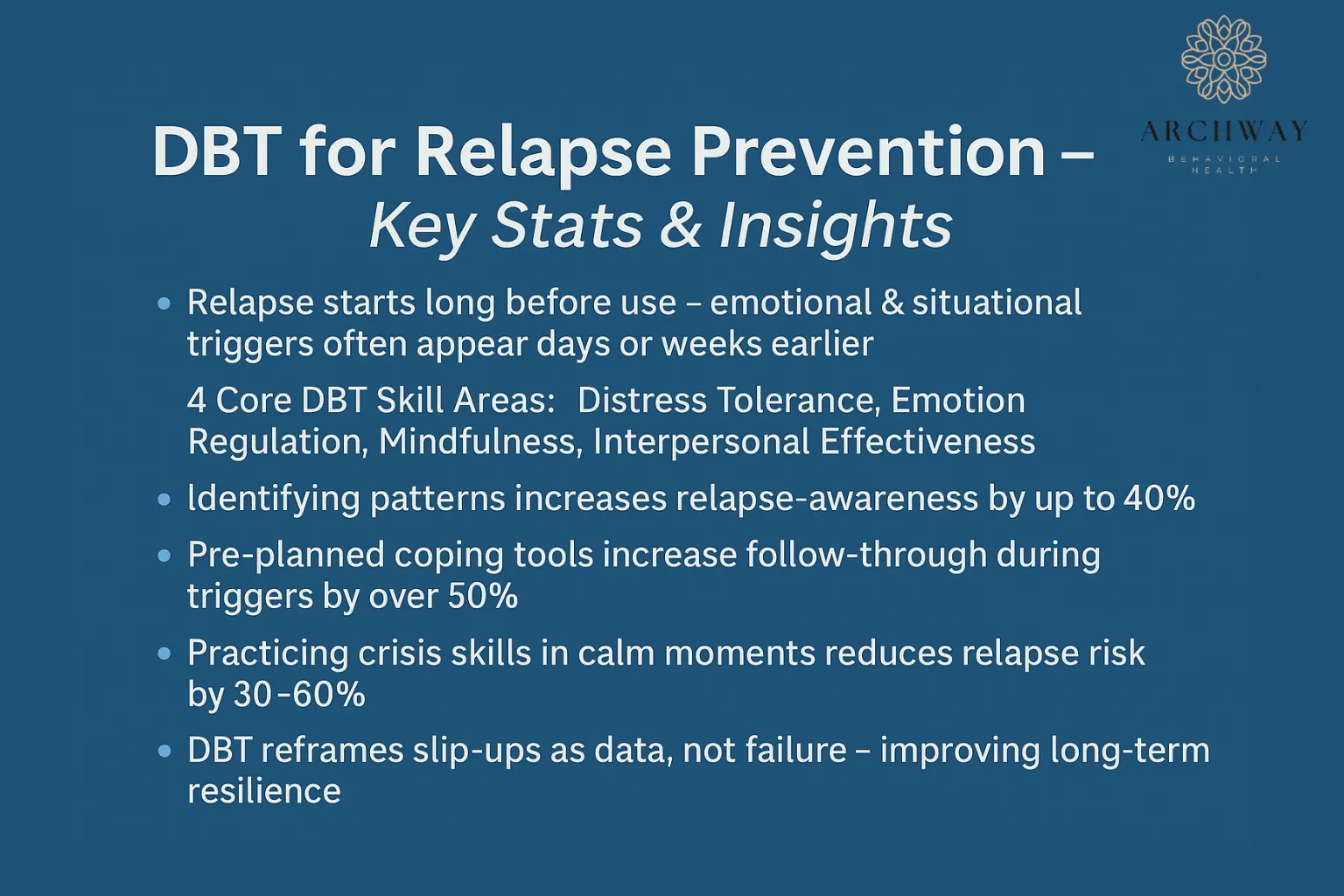
Relapse doesn’t start with the moment you pick up the drink or make the call. It starts hours, days, sometimes weeks before—with emotional cues, stressful situations, and familiar thoughts.
DBT therapy helps you map out:
- The people, places, or activities that tend to increase risk
- Emotional warning signs like boredom, rejection, or feeling invisible
- Thought patterns like “I’ll just do it this one time” or “I deserve this”
When you can name your own personal “relapse cycle,” you stop being at the mercy of it. You become an observer, a planner, and—eventually—a participant in breaking the loop.
Build Real-Life Coping Tools, Not Just Mental Lists
Knowing what triggers you is step one. Having something to do instead? That’s where the change happens.
In DBT, we teach skills across four key areas:
1. Distress Tolerance
When you can’t change the moment, you still need to survive it. DBT offers tools like:
- Ice diving or cold-water splash to reset your system
- “Radical acceptance” to reduce the fight against what’s already happening
- Distraction skills like TIPP (temperature, intense exercise, paced breathing, progressive relaxation)
2. Emotion Regulation
Feelings aren’t the enemy—but unregulated emotions can tip you into survival mode fast. DBT helps you:
- Name what you’re feeling clearly (anger? shame? disappointment?)
- Reduce emotional vulnerability through sleep, nutrition, and self-respect
- Build a plan for what to do when a wave hits
3. Mindfulness
This isn’t about meditating perfectly. It’s about catching yourself in the moment.
- “Wise mind” techniques help you blend logic and emotion
- Mindful breathing or observation grounds you during chaos
- Daily mindfulness rituals (even brushing your teeth on purpose) build awareness muscles
4. Interpersonal Effectiveness
Sometimes relapse is fueled by people-pleasing, resentment, or feeling unheard.
- DBT teaches how to say no without guilt
- How to ask for help without shame
- And how to set boundaries that protect your progress, not isolate you
Practice “Crisis Skills” in Calm Moments—Not Just in the Heat of It
It’s hard to think clearly when you’re in the middle of a trigger. That’s why DBT encourages pre-rehearsing your most important skills—so they become second nature.
We recommend building a “go-to list” of:
- 3 things that calm your body
- 3 people you can text or call (even if you don’t want to)
- 3 places you can go where relapse feels less likely
You don’t need to memorize 100 coping strategies. You just need a small set of reliable tools you’ve practiced before you need them.
Reframe “Slip-Ups” as Learning, Not Failure
If your plan only works when you’re perfect, it’s not a plan—it’s a trap.
In DBT therapy, we emphasize that relapse prevention is about resilience, not rigidity. You are allowed to:
- Have urges
- Make mistakes
- Change your mind
- Learn from what didn’t work
Slipping doesn’t mean starting over. It means starting from where you are—with more information and more support.
At Archway, we help clients build compassion into their plans. Because shame doesn’t protect sobriety. But understanding does.
Need DBT Therapy in Highland Beach or Delray Beach?
If you’re looking for DBT therapy in Highland Beach or nearby cities like Delray Beach, Florida, Archway Behavioral Health offers DBT-informed services in a safe, nonjudgmental setting.
Whether you’ve already quit, are still drinking socially, or just want to explore a different relationship with substances, we’ll meet you there. No labels. Just support.
FAQs: Building a Relapse Prevention Plan with DBT Therapy
Do I need to be in recovery already to build a relapse plan?
Not at all. In fact, sober curious people often benefit most from this kind of planning. It lets you explore change without pressure or fear.
How long does DBT therapy take to work?
Some people notice shifts in just a few sessions. Others find that deeper results take 3–6 months. What matters most is practicing the skills between sessions.
What if I don’t like group therapy?
No problem. Archway offers both individual DBT therapy and group options. Some clients do both. We’ll help you figure out what feels right.
I don’t want to quit completely. Can I still get help?
Yes. DBT isn’t just for people trying to get sober—it’s for anyone trying to stay emotionally regulated and intentional in their choices.
Is this only for “serious” mental health issues?
No. DBT started as a treatment for Borderline Personality Disorder, but it’s now used widely for anxiety, emotional dysregulation, burnout, and substance use patterns at any stage.
This Isn’t About Perfection. It’s About Possibility.
Call (888) 488-4103 to learn more about our DBT therapy services in Boca Raton, Florida.
You don’t have to decide everything right now. You don’t have to quit cold turkey. But if you’re wondering what life could look like with a little more clarity, DBT therapy can help you build a plan that honors your version of better.
And that’s a really good place to start.