It’s a particular kind of heartbreak—the moment you realize your child is using again. You’ve done everything. Paid for treatment. Set boundaries. Picked them up at 2am when no one else would. Now what?
This is where many families find themselves—exhausted, afraid, and unsure of what actually helps. A partial hospitalization program (PHP) offers something most parents don’t even know they’re allowed to ask for: structured care that supports recovery without requiring you to carry the full weight of it anymore.
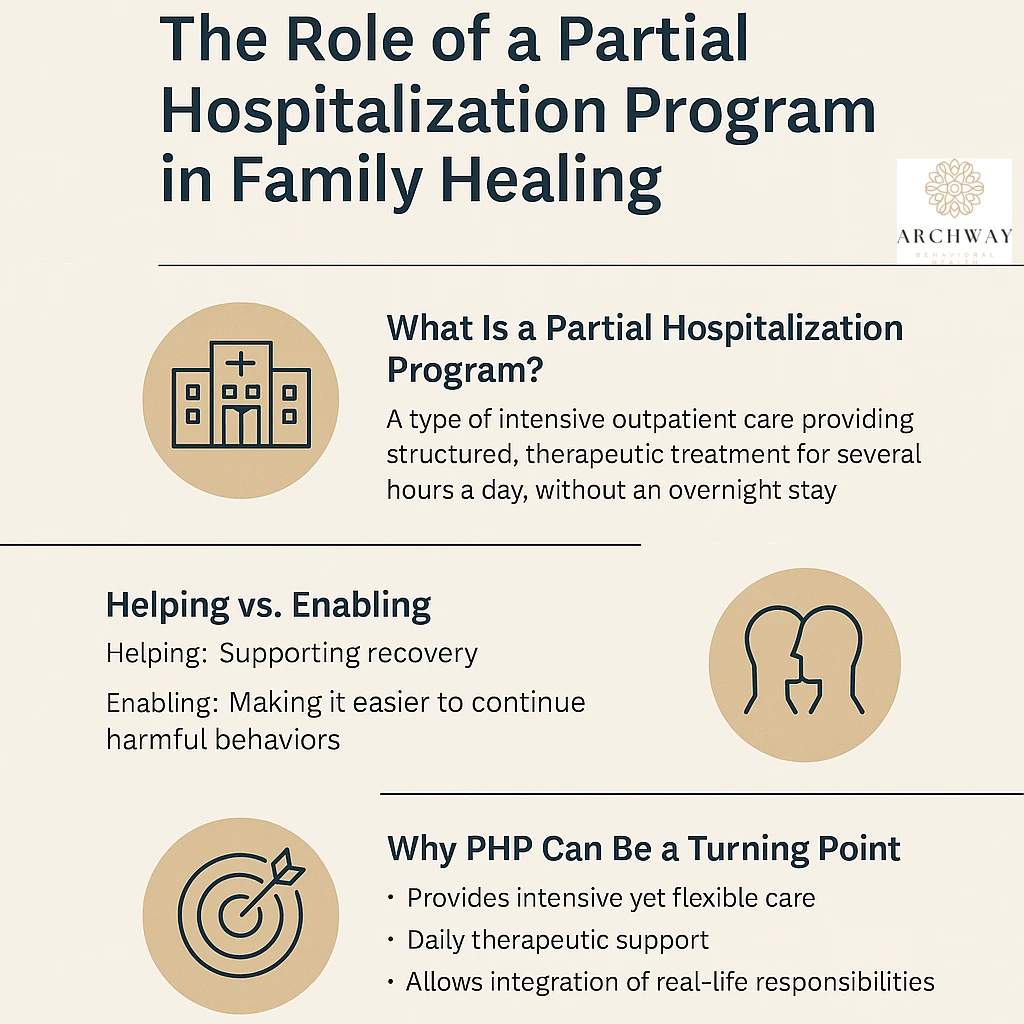
What Is a Partial Hospitalization Program—And Why Does It Matter?
A partial hospitalization program is a type of intensive outpatient care that bridges the gap between inpatient treatment and weekly therapy. Think of it as structured, therapeutic care—5 to 6 hours a day, several days a week—without requiring an overnight stay.
For families, PHP means two things:
- Your child gets daily clinical support, accountability, and therapy.
- You get space to breathe, reflect, and begin healing too.
This level of care is often ideal for young adults who’ve relapsed or are struggling to fully engage in recovery. It offers real-time therapeutic structure without removing them from daily life entirely.
Helping vs. Enabling: What’s the Line?
Parents often wrestle with the question: Am I helping—or just making it easier for them to keep using?
Here’s the hard truth: love doesn’t always show up as a rescue. Sometimes it’s a referral. Sometimes it’s a clear “I’ll support your recovery, not your self-destruction.”
A partial hospitalization program gives you something essential: a trusted clinical container. You’re not abandoning your child. You’re letting trained professionals hold what you’ve been trying to carry alone.
Why PHP Can Be a Turning Point—Even After Relapse
Relapse doesn’t mean failure—it means something wasn’t working. A PHP offers a reset with enough intensity to make a difference and enough flexibility to integrate real-life responsibilities.
Young adults often respond well to PHPs because:
- They don’t feel trapped or cut off from life.
- They still get daily therapeutic support.
- It meets them where they are—ambivalent, scared, or stubborn.
If you’re looking for a partial hospitalization program in Highland Beach, Florida, Archway offers services designed specifically for young adults and families navigating this painful but hopeful stage.
Family Healing Isn’t Optional—It’s Necessary
Your child’s healing is only part of the equation. A good PHP includes family sessions, psychoeducation, and support for you, too.
Here’s what that looks like:
- Learning how to set clear, compassionate boundaries
- Understanding the psychology of relapse
- Releasing guilt you were never meant to hold
You deserve support. Not just as a parent—but as a person who’s been walking through hell for someone they love.
Why Archway’s PHP Is Different
Located in Boca Raton and serving families across South Florida—including those looking for partial hospitalization programs in Delray Beach, Florida—Archway offers a treatment environment that feels safe, specialized, and grounded in hope.
Our PHP model includes:
- Individual and group therapy
- Psychiatric care and medication management
- Trauma-informed, age-appropriate support for young adults
- Family involvement every step of the way
We’re not just treating your child. We’re walking with your whole family.
This Isn’t the End of the Road
If you’re reading this, it means you haven’t given up—and that matters. At Archway, we believe relapse is a moment, not a verdict. PHP can be the next right step—for your child and for your family.
📞 Call (888) 530-0227 or visit our partial hospitalization program page to learn more about our services in Boca Raton, Florida. Let’s talk about what healing could look like—this time, for everyone.
